





OSMU is a hyperspectral imaging spectrometer to be integrated in a South-African Multi-Sensor Microsatellite Imager (MSMI) onboard of the second generation SUNSAT satellite ZASat2.
Name: Optical SpectroMeter Unit
Mission: MSMI
Application: Imaging
Life:
The OSMU is the spectrometer part of MSMI. It comprises the collimator, the prisms, two detector lenses and the two detectors.
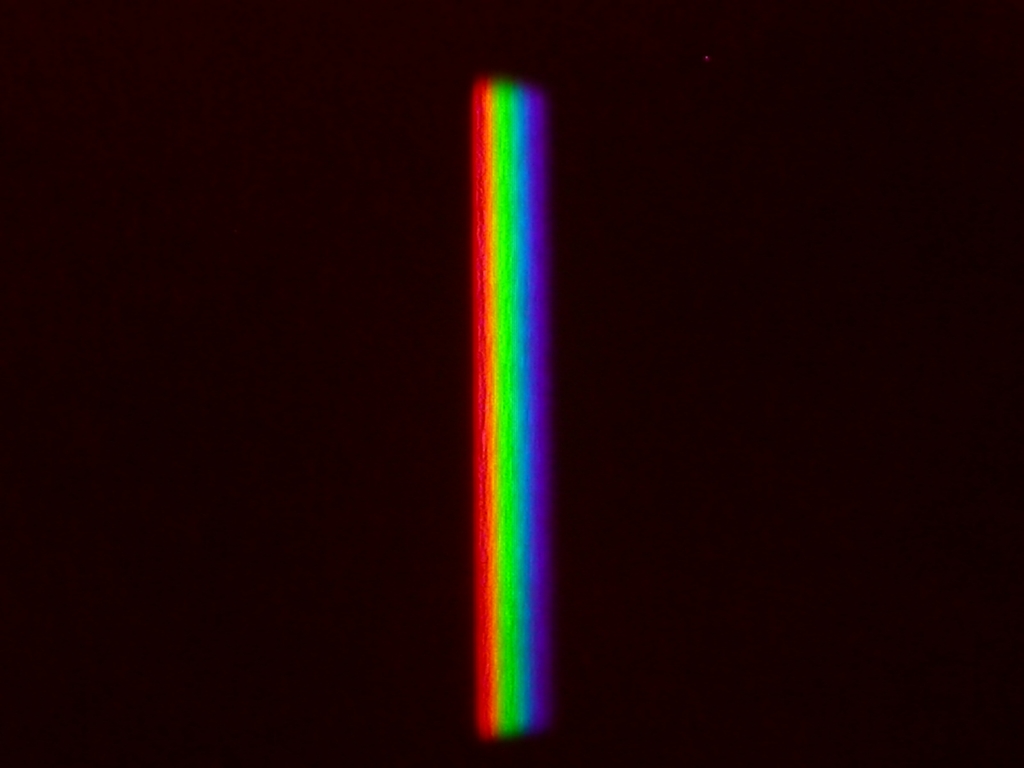
The OSMU optical system is a spectrometer, that divides the incoming light into its spectral components and that re-images the slit, separated in its spectral components, on an array detector. The OSMU optical system consists of refractive components. Prisms are used to separate the light into its spectral components.
The OSMU spectrometer contains two spectral channels: one in the visible and one in the infrared range. It has a field of view of 1,25° imaged on a detector of 1000 by 400 pixels. About 200 spectral bands are recorded in the wavelength range between 350 and 2350nm, with a spectral resolution of 5-14nm and at a spatial ground resolution of 15m (seen from height of 600km).
Wavelength range: 350 – 2350nm.
The spectrometer comprises:
OSMU is an advanced scientific instrument, intended as technology demonstrator, for the remote sensing community, bridging between in-situ and remote sensing systems (airborne/spaceborne).
Monitoring of the Earth to help in the fields of vegetation analysis, forestry, agriculture, soil monitoring, etc.
South Africa, like Algeria and Nigeria before it, has recognized that one important way to support economic and social development and to enter the league of space-capable nations is to build and operate a small remote sensing satellite capable of providing basic multispectral data in an operational mode. With the addition of Kenya, these three countries already are planning an innovative, indigenous multisatellite system to support the monitoring and management of Africa’s rich natural resources. With other international partners, the South African small satellite manufacturer SunSpace already built a remote sensing spacecraft that carried both multispectral and hyperspectral scanners: ZASat1 or SUNSAT.
ZASat1 or SUNSAT was a micro-satellite designed and built by electrical engineering students at the Stellenbosch University in South Africa. This was the first micro-satellite developed in South Africa. The mission had a successful flight and ended in 2001.
The second generation SUNSAT satellite was named ZASat2 (or SUMBANDILA) and had the objective to make a bridge between in-situ and remote sensing systems (airborne/spaceborne), for the benefit of (South) African development.
OIP was responsible for the development of the imaging spectrometer part of the optical system (i.e. OSMU spectrometer).
The cover, baseplate and OFE periscope were responsibility of University of Stellenbosch
Note that OSMU was a space-borne derived version of the earlier developed APEX spectrometer, which was intended for use on an aircraft.
The mission was cancelled (due to funding issues).
Structural and Thermal Model (STM) and Proto-Flight hardware was delivered to University of Stellenbosch.
The imaging spectrometer part of the MSMI optical system (i.e. OSMU spectrometer) is developed by OIP for the University of Leuven [B] and University of Stellenbosch [SA] .
The most important users are University of Stellenbosch [SA] and University of Leuven [B].

This site is protected by reCAPTCHA and the Google Privacy Policy and Terms of Service apply.

