




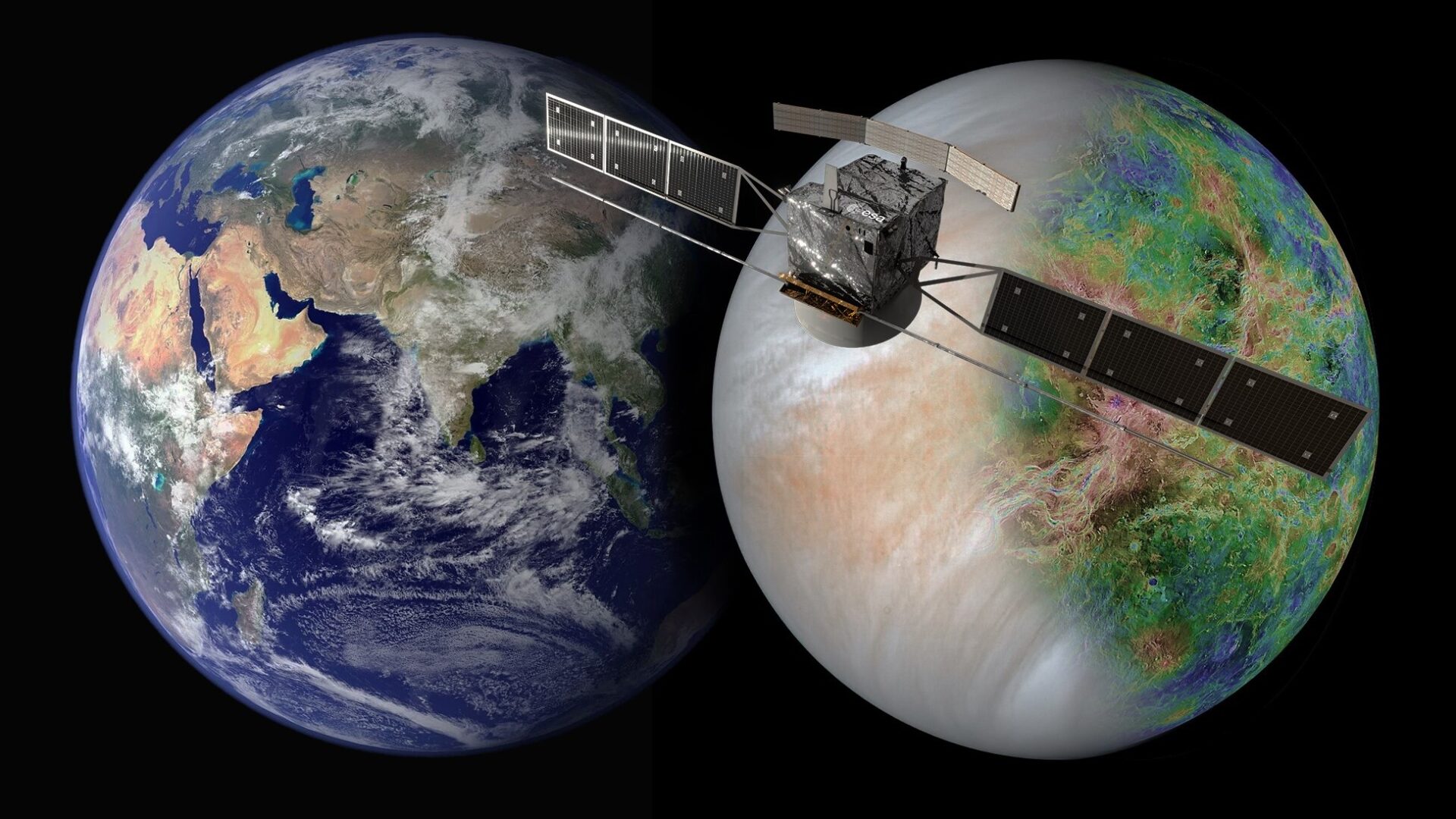
EnVision will determine the nature and current state of geological activity on Venus, and its relationship with the atmosphere, to understand how Venus and Earth could have evolved so differently. EnVision will use a phased array synthetic aperture
radar, VenSAR, and will be equipped with a spectrometer suite. This suite consists of VenSpec-M, VenSpec-U and VenSpec-H, three optical spectrometers operating in the UV and infrared, which will map trace gases above and below the clouds, including volcanic gases, and map the surface composition and emissivity.
Name: Venus Spectrometer
Mission: EnVision
Application: The search for water and sulphur-bearing compounds
Life: Will launch in 2031
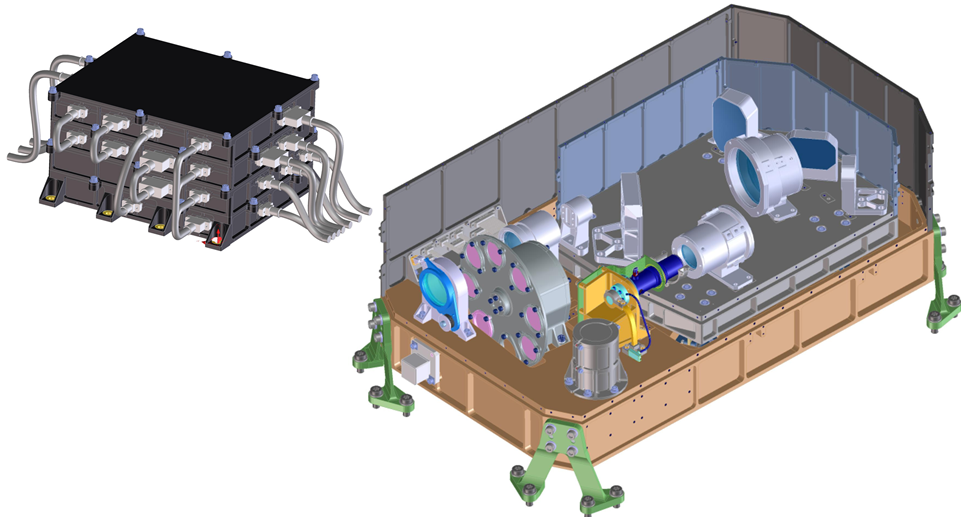
The VenSpec-H instrument is part of the EnVision mission, which has been selected by ESA as the fifth Medium class mission in the Cosmic Vision plan, targeting a launch in 2031.
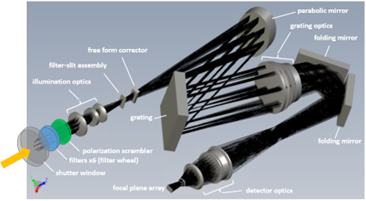
The scientific objectives of VenSpec-H are related to the search for water and sulphur-bearing compounds. Four spectral windows have been selected to characterize the troposphere and mesosphere of Venus. They span the spectral range between 1 and 2.5 μm.
VenSpec-H is realised by an international consortium of institutes and companies from Belgium, Germany, Spain, Switzerland, Finland, the Netherlands, Portugal and the Czech Republic with OIP as industrial prime contractor. In addition, OIP performs the opto-mechanical design and integration, alignment and testing of the instrument. The project is funded by BELSPO. IASB-BIRA [B] is the principal investigator.



This site is protected by reCAPTCHA and the Google Privacy Policy and Terms of Service apply.

